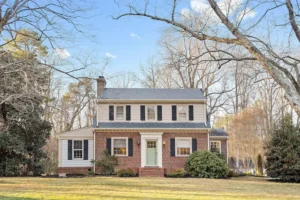


A VA loan can change the math on a move-up home purchase in Mechanicsville, Ashland, Ruther Glen, or Montpelier. The key is knowing how to use a VA loan strategically, not simply treating it as a zero-down option. For an eligible borrower, the program can preserve cash for moving expenses, inspections, repairs, or the upgrades that make a new home work for a growing family.
Hanover County continues to appeal to buyers who want space, schools, and access to Richmond without an urban-core lifestyle. The U.S. Census Bureau estimates Hanover County’s population at more than 112,000 residents, reinforcing the demand for established neighborhoods and new-construction communities. Whether a Saturday includes youth sports, a trip to Kings Dominion, or dinner in Ashland, homeownership decisions here tend to be long-term decisions.
By Duane Buziak, NMLS #1110647
Table of Contents
- Understanding what a VA loan can finance
- Confirming eligibility and entitlement
- Building a confident purchase offer
- Calculating the funding fee and monthly payment
- Comparing a broker-guided VA loan
- Avoiding common VA loan mistakes
- VA loan FAQs
How to use a VA loan for a purchase
A VA-backed mortgage is available to eligible veterans, active-duty service members, certain National Guard and Reserve members, and qualifying surviving spouses. It can be used to buy a primary residence, refinance an existing home, or in some cases finance a newly built home. It is not intended for a second home, vacation property, or a purely investment purchase.
The practical advantage is flexibility. A qualified buyer may purchase with 0% down, and VA financing does not require monthly mortgage insurance. That does not mean every VA loan has the same cost. Interest rate, seller-paid closing-cost limits, property condition, debt-to-income profile, credit history, and the funding fee all affect the final transaction.
For Hanover County move-up buyers, the decision is often between VA and Conventional financing. Conventional can be especially compelling when a buyer has substantial equity from a current home, a larger down payment, or a pricing advantage tied to a stronger credit profile. VA may be the stronger lane when preserving cash matters, the buyer has remaining entitlement, and the property meets program requirements. A mortgage broker should price both options before a contract is written.
Start with eligibility, entitlement, and a safe pre-qualification
Your first document is generally a Certificate of Eligibility, which confirms the entitlement available for VA financing. Full entitlement can support a purchase above the standard county loan limit without a down payment, provided the borrower qualifies for the payment and the property appraises. Buyers who have an active VA loan or have not restored entitlement need a more detailed review.
Before a full application, ask about a soft credit pull mortgage review. Hanover County Mortgage offers NoTouch Credit Pull availability so buyers can discuss estimated scores, debts, payment targets, and program fit without a hard inquiry or credit hit. A no hard inquiry mortgage pre approval conversation is useful early in the process, but a complete underwritten approval may still require a traditional credit report and verified documentation.
Gather recent pay stubs, W-2s, two years of tax returns if self-employed, bank statements, photo identification, and documentation for any large deposits. If you receive disability income, retirement income, or variable overtime, provide the supporting award letters or history early. Clear documentation prevents a last-minute underwriting surprise.
Build a VA offer that sellers can understand
A VA offer should not be presented as a weaker offer. The financing contingency, earnest money, closing timeline, appraisal, and seller concessions matter more than a loan label. A well-prepared buyer can compete effectively by showing verified income, funds for closing, a realistic contract timeline, and a clear financing plan.
VA rules allow sellers to pay certain closing costs and concessions, subject to program limits. That can be helpful, but it is not automatic. In a competitive neighborhood, an aggressive request for concessions can change how a seller views the offer. Your broker and real estate agent should decide whether a seller contribution, a slightly higher rate with broker credits, or an ask-about-our-no-out-of-pocket-closing-options structure fits the offer best.
The VA appraisal has two jobs: establish value and identify certain property-condition concerns. Peeling paint, safety issues, roof concerns, missing handrails, or non-functioning systems can delay closing if repairs are needed. A newer home may reduce those risks, while an older property may still be an excellent choice when its condition is understood before the offer is submitted.
A worked VA loan example with real math
Assume an eligible first-time VA user buys a Hanover County home for $450,000 with $0 down. The base loan amount is $450,000. Using a 2.15% funding fee for a first-use, zero-down purchase, the fee equals $9,675:
$450,000 × 0.0215 = $9,675
If financed, the total loan amount becomes $459,675. At a 6.25% fixed interest rate for 30 years, principal and interest are approximately $2,830 per month. That payment does not include property taxes, homeowners insurance, homeowners association dues, or any optional flood insurance. If estimated taxes and insurance total $560 per month, the estimated total housing payment is $3,390 per month.
A borrower exempt from the funding fee due to qualifying service-connected disability compensation would keep the loan amount at $450,000. At the same 6.25% rate and 30-year term, principal and interest would be approximately $2,771 per month. The $59 monthly payment difference comes from financing the $9,675 fee, while the upfront difference is the full $9,675.
Rates, fees, taxes, insurance, and eligibility status change. This example is educational, not a loan quote or payment guarantee.
Why a broker comparison matters before you commit
A broker can evaluate VA, FHA, Conventional, jumbo, construction, and renovation options across available wholesale channels. That is structurally different from working with a company that offers only its own menu. The best choice depends on the actual pricing, underwriting fit, service level, and closing timeline for your file.
| Decision point | Mortgage broker model | Single-shelf mortgage company model |
|---|---|---|
| Lender access | Can compare participating wholesale investors for a specific borrower profile. | Uses that company’s available programs and pricing structure. |
| FICO floors | Minimum scores may vary by investor and loan program. | Minimum scores follow the company’s overlays and program rules. |
| Program breadth | Can review VA, FHA, Conventional, DSCR, non-QM, construction, and renovation lanes. | Program availability depends on the company’s current product menu. |
| Pricing flexibility | Allows comparison of rate, points, credits, and closing structures among available options. | Pricing is limited to the company’s offered rate sheets and terms. |
| Credit review approach | May begin with a soft-pull mortgage broker consultation before full application. | Process and credit inquiry policy vary by company. |
Avoid the mistakes that cost VA buyers time
Do not assume your entitlement is unlimited without checking it. Do not make a major purchase, open a new credit line, or move money between accounts without discussing it with your broker. A $700 vehicle payment can materially change qualifying capacity, even when income is strong.
Also, do not confuse pre-qualification with final approval. A mortgage pre approval without hard pull can be a smart starting point, but final approval relies on verified income, assets, credit, title work, appraisal, and property eligibility. Keep documents current through closing and respond quickly to requests.
Finally, compare the full payment rather than only the rate. A lower rate with more discount points may not make sense if you expect to sell, refinance, or move within a few years. A slightly higher rate with a credit toward closing costs can sometimes be the better cash-flow decision.
VA Loan FAQs
Can I use a VA loan with no down payment?
Yes. Eligible buyers may finance 100% of a primary residence purchase when they qualify and have sufficient entitlement.
Do VA loans require monthly mortgage insurance?
No. VA loans do not include monthly mortgage insurance, though a funding fee may apply.
What is the VA funding fee?
It is a one-time program fee that may be paid at closing or financed into the loan. The amount depends on use history, down payment, and exemption status.
Can I use a VA loan more than once?
Yes. Entitlement can be restored after a prior VA loan is paid off and other program conditions are met. Remaining entitlement may also support another purchase.
Can a VA loan be used for new construction?
Potentially, yes. Construction financing requires careful coordination because builder, draw, appraisal, and permanent-financing requirements differ from a standard resale purchase.
Does a VA appraisal take longer?
Not necessarily. Timing depends on appraiser availability, property complexity, repairs, and local transaction volume.
Can Hanover County Mortgage start with a soft credit pull?
Yes. Ask about NoTouch Credit Pull availability for an initial no credit hit mortgage application discussion before deciding whether to proceed with a full application.
Is Hanover County Mortgage a broker?
Yes. Hanover County Mortgage operates as a mortgage brokerage and advisory resource connected to Coast2Coast Mortgage, LLC, offering guidance across multiple loan programs.
A VA loan works best when it is matched to your long-term plans, your cash reserves, and the specific home you want to buy. Start with a low-pressure conversation, compare VA and Conventional side by side, and build an offer that gives you confidence before you sign.
Legal Disclaimer: This article is for educational purposes only and is not a commitment to lend, approval, credit decision, legal advice, tax advice, or financial advice. Loan programs, rates, fees, eligibility standards, and underwriting requirements are subject to change and vary by borrower and property. Equal Housing Opportunity.
Duane Buziak | Mortgage Maestro | NMLS #1110647 | Coast2Coast Mortgage, LLC NMLS #376205 | Licensed in VA, FL, TN, GA & DC [Contact] | NoTouch Credit Pull available — no hard inquiry, no credit hit.