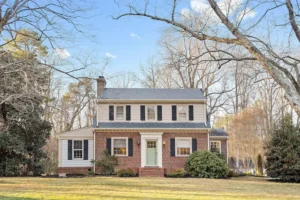


Duane Buziak Teaches: First Time Homebuyer Virginia
Buying your first home is not just about finding a monthly payment you can live with. In Hanover County, it often means deciding whether a newer Mechanicsville neighborhood, an Ashland home near I-95, or a property with more land near Montpelier best fits the next five to 10 years of your life. A first time homebuyer Virginia plan should start with financing clarity before the weekend showings, contractor conversations, and school-district decisions begin.
For buyers near Richmond, the strongest starting point is usually a low-pressure conversation about income, debts, cash reserves, credit profile, and target price. That allows you to compare conventional, FHA, and VA financing based on the actual transaction rather than choosing a loan solely because its down payment looks lowest.
Table of Contents
- Why first-time buyers need a financing plan
- Conventional, FHA, and VA loan choices
- A fully worked payment example
- Pre-qualification without a hard credit inquiry
- Local decisions that affect your budget
- Questions first-time buyers ask
Start with the payment, not the maximum approval
A broker can review what a program may permit, but your personal payment ceiling should account for the life you want after closing. A home near Kings Dominion may offer different commute patterns, lot sizes, and tax considerations than a home closer to Ashland or Mechanicsville. Those differences can affect insurance, utility costs, maintenance, and how much cash you want to retain after closing.
Hanover County spans approximately 468 square miles, according to the U.S. Census Bureau Gazetteer. That local scale matters: two homes with the same price can produce very different driving routines, service costs, and resale audiences. Build your budget around principal and interest, property taxes, homeowners insurance, mortgage insurance where applicable, HOA dues, and a realistic maintenance reserve.
A useful rule is to keep the purchase decision separate from the approval decision. An approval amount is a ceiling produced by program rules and documented finances. Your comfort number is the payment that leaves room for retirement savings, childcare, repairs, travel, and the surprises that come with ownership.
Which loan lane fits a first time homebuyer in Virginia?
Conventional financing deserves a close look for many Hanover County buyers, especially those purchasing newer homes, moving into a larger property, or bringing a down payment above the minimum. Some conventional options allow as little as 3% down for qualified buyers. Mortgage insurance can generally be removed later when eligibility requirements are met, which is a meaningful long-term consideration.
FHA financing can make sense when credit history is still developing or when a buyer needs a more forgiving debt-to-income structure. FHA commonly permits a 3.5% down payment for borrowers meeting its credit-score threshold, though individual file requirements, documented income, and property conditions still matter. FHA mortgage insurance works differently from conventional mortgage insurance, so compare the full payment and future refinance possibilities rather than only the upfront cash requirement.
VA financing is often compelling for eligible veterans and service members because a down payment may not be required. The VA funding fee, if applicable, should be included in the comparison rather than treated as an afterthought. Conventional, FHA, and VA guidelines change, and a broker should review current requirements against your specific scenario before you make an offer.
Duane Buziak, NMLS #1110647, helps buyers compare the structure of these options before they are under contract, when there is time to make a calm decision instead of a rushed one.
| Comparison point | Mortgage broker approach | Single-shelf mortgage company approach |
|---|---|---|
| Wholesale source access | Can evaluate multiple available program sources for a qualifying file. | Generally evaluates its own available product shelf. |
| FICO floors | Can compare available credit-score overlays across eligible programs. | Uses that company’s published and internal eligibility standards. |
| Program breadth | May offer conventional, FHA, VA, USDA, jumbo, construction, renovation, and selected non-QM options. | Program selection varies by company and its current product menu. |
| Pricing flexibility | Can compare available pricing structures, points, credits, and closing-cost strategies. | Pricing is based on that company’s available rate-and-fee structure. |
| Pre-qualification process | May begin with a NoTouch Credit Pull when appropriate before a full application. | Inquiry practices vary and should be confirmed before authorization. |
A fully worked Virginia purchase example
Here is a simple conventional-loan illustration, not a quote or promise of terms. Assume a $360,000 purchase price and a 5% down payment of $18,000. The resulting loan amount is $342,000.
At a fixed 6.50% interest rate for 30 years, the principal-and-interest payment is approximately $2,161.67 per month. That calculation is based on a monthly rate of 0.541667% over 360 payments. If the broker compensation fee in this illustration is 1.00% of the loan amount, the fee equals $3,420: $342,000 multiplied by 0.01.
The cash required is not simply $18,000 plus $3,420. It may also include appraisal, title charges, prepaid insurance, daily interest, tax reserves, and any negotiated seller contribution or credit. Property taxes, homeowners insurance, HOA dues, and mortgage insurance are also separate from the $2,161.67 principal-and-interest figure. Ask about our no-out-of-pocket closing options when reviewing an offer strategy, because eligibility depends on pricing, seller participation, and the property.
Use a soft pull before you need a full approval
A soft credit pull mortgage review can be a practical first step when you are still comparing neighborhoods and price points. A no hard inquiry mortgage pre approval conversation can help identify obvious issues, such as a recently opened account, a debt payoff that could improve qualifying, or an income document that needs clarification.
A soft pull mortgage broker review is not the same as a complete underwriting approval. Once you select a property and authorize a full application, a hard inquiry and full documentation review may be required. Still, beginning with a mortgage pre approval without hard pull can prevent buyers from authorizing unnecessary credit inquiries while they are early in the process.
Bring your most recent pay stubs, two years of W-2s or tax returns if applicable, recent bank statements, and a clear explanation for large deposits. Self-employed buyers should plan for a deeper review of returns, business documents, and bank activity. Clean documentation is one of the best defenses against a closing delay.
Questions first-time buyers ask
1. How much down payment does a first-time buyer need in Virginia?
It depends on the program. Some conventional options begin at 3%, FHA may allow 3.5% for eligible borrowers, and eligible VA borrowers may have a zero-down option.
2. Is a 20% down payment required?
No. A larger down payment can reduce the loan amount and may reduce or eliminate mortgage insurance, but many buyers purchase with less than 20% down.
3. Can I get pre-qualified with no credit hit?
A preliminary NoTouch Credit Pull may be available in appropriate situations. Confirm whether an inquiry is soft or hard before authorizing credit access.
4. Does pre-qualification guarantee my loan?
No. A full approval depends on verified income, assets, credit, appraisal, title, property condition, and final program review.
5. Is conventional or FHA better for a first-time buyer?
Neither is automatically better. Conventional may be attractive for stronger credit and long-term mortgage-insurance flexibility, while FHA can fit some buyers with a thinner credit profile.
6. Can a seller help with closing costs?
Often, yes, subject to program limits, contract negotiations, and appraisal considerations. The structure should be reviewed before writing the offer.
7. Should I wait for mortgage rates to fall?
That depends on your payment, inventory, and timeline. Waiting can improve a rate opportunity, but it can also mean more competition or higher home prices.
8. What should I avoid before closing?
Avoid opening new credit, financing furniture or a vehicle, changing jobs without discussing it first, or moving money between accounts without documentation.
9. Is Hanover County Mortgage legit?
Hanover County Mortgage operates with a local, consultative broker model connected to Coast2Coast Mortgage, LLC. Ask for clear program terms, fees, and documentation expectations before proceeding.
10. When should I talk to a broker?
Talk to a broker before serious house hunting. A 20-minute conversation can clarify your price range, cash needs, and the documents you should gather.
The right first home is the one that supports your life after move-in day. Get clear on payment, cash, loan structure, and documentation early, then shop Hanover County with confidence instead of pressure.
Legal disclaimer: This article is for educational purposes only and is not a commitment to extend credit or an offer to provide financing. Loan approval, rates, fees, terms, and program eligibility are subject to credit review, income and asset documentation, appraisal, title review, property requirements, and applicable guidelines. Equal Housing Opportunity.
Duane Buziak | Mortgage Maestro | NMLS #1110647 | Coast2Coast Mortgage, LLC NMLS #376205 | Licensed in VA, FL, TN, GA & DC [Contact] | NoTouch Credit Pull available — no hard inquiry, no credit hit.