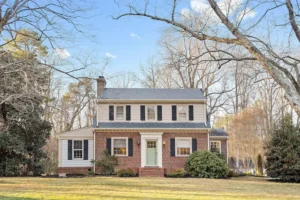


Duane Buziak Teaches: FHA Loans for Hanover County Homebuyers
An FHA loan can be the difference between waiting for a larger down payment and making a well-prepared offer on a home in Mechanicsville, Ashland, Ruther Glen, or Montpelier. That does not make it the automatic best fit. FHA financing trades a smaller upfront down payment and more flexible credit standards for mortgage insurance rules that can remain in place for the life of the loan.
For many Hanover County buyers, especially households balancing a move-up purchase, school-district priorities, or a new-construction timeline, the right question is not simply, “Can I qualify for FHA?” It is, “Does FHA produce the strongest monthly payment and offer strategy compared with Conventional financing?”
Duane Buziak, NMLS #1110647, helps buyers evaluate that question before they commit to a property or authorize a hard credit inquiry. A NoTouch Credit Pull can help start the conversation with no hard inquiry and no credit hit.
Table of Contents
- What FHA loans are designed to do
- FHA credit score and down payment rules
- A worked FHA payment example
- FHA loans versus Conventional loans
- Hanover County considerations
- Preparing for pre-qualification
- FHA loan FAQs
What FHA Loans Are Designed to Do
FHA loans are mortgages insured by the Federal Housing Administration, an agency within HUD. The insurance reduces risk for the approved mortgage provider funding the transaction, which is why FHA rules can accommodate borrowers whose credit profile, savings, or debt picture may not yet fit a Conventional approval.
HUD rules allow a 3.5% minimum down payment for borrowers with a credit score of 580 or higher. Borrowers with scores from 500 through 579 may be eligible with 10% down, although many mortgage providers apply stricter internal standards. Credit score is only one part of the file. Income stability, debt-to-income ratio, payment history, property condition, and available funds also matter.
FHA can be useful when a buyer has recovered from a prior credit event, has limited cash reserves after a move, or needs a more forgiving debt-to-income review. It can also work for a buyer purchasing a primary residence who wants to preserve cash for inspections, moving expenses, or improvements after closing. FHA is not intended for second homes or investment properties.
The Consumer Financial Protection Bureau, HUD, the Federal Housing Finance Agency, and Fannie Mae all publish consumer and market education from their official homepages. Their standards reinforce a point buyers sometimes miss: a low down payment is not the same as a low total cost. The term, interest rate, mortgage insurance, property taxes, homeowners insurance, and closing costs all belong in the comparison.
FHA Credit, Down Payment, and Mortgage Insurance
The FHA minimum down payment is 3.5% with a qualifying score of 580 or above. That is lower than the 5%, 10%, or 20% down payments many buyers associate with Conventional financing, but FHA requires two forms of mortgage insurance.
First, the upfront mortgage insurance premium is generally 1.75% of the base loan amount. It is commonly financed into the loan rather than paid in cash at closing. Second, the annual mortgage insurance premium is paid monthly. For many 30-year FHA loans with more than 90% loan-to-value, the annual premium is 0.55% of the base loan amount under current FHA schedules.
For a down payment below 10%, FHA monthly mortgage insurance generally lasts for the life of the loan. With 10% down or more, it generally lasts 11 years. A future refinance into a Conventional loan may be worth reviewing if equity, credit, and market terms improve, but refinancing is never automatic and involves a new qualification review.
A Fully Worked FHA Loan Example
Here is a clear illustration using a $350,000 primary-residence purchase price. This is an example only, not a rate quote or approval.
The buyer puts down 3.5%, or $12,250. The base FHA loan amount is therefore $337,750. The FHA upfront mortgage insurance premium at 1.75% equals $5,910.63. If financed, the total loan amount becomes $343,660.63.
At a 6.50% fixed interest rate on a 30-year term, principal and interest on $343,660.63 is approximately $2,172.13 per month. The annual FHA mortgage insurance premium at 0.55% of the $337,750 base loan is $1,857.63 per year, or $154.80 per month.
The illustrated monthly principal, interest, and FHA mortgage insurance total is $2,326.93. Property taxes, homeowners insurance, any HOA dues, and applicable flood insurance are not included. Those costs can materially change the total housing payment, particularly in a newer neighborhood with an HOA.
That math also shows why a buyer should compare FHA and Conventional financing side by side rather than selecting a program based only on the down payment.
FHA Loans Versus Conventional Financing
Conventional financing often carries more weight for Hanover County move-up buyers because strong credit, accumulated equity, and larger down payments can reduce or eliminate mortgage insurance. FHA can still be the better route when its approval flexibility or pricing produces a more workable result.
| Comparison point | FHA loan | Conventional loan |
|---|---|---|
| Broker access | A broker can compare eligible FHA options and overlays across available wholesale channels. | A broker can compare eligible Conventional options, including fixed-rate and certain specialty structures. |
| FICO floors | HUD minimum is 580 for 3.5% down and 500 for 10% down, subject to provider overlays. | Fannie Mae Conventional files commonly require a 620 minimum, with pricing and approval affected by the full profile. |
| Program breadth | Primary-residence purchase and refinance options, including FHA 203(k) renovation financing. | Primary-residence, second-home, and investment-property options, subject to eligibility. |
| Mortgage insurance | Upfront premium is generally 1.75%, plus monthly mortgage insurance under FHA rules. | Private mortgage insurance may be required below 20% down and can often be removed when rules are met. |
| Pricing flexibility | Often helpful where credit or debt ratios need more flexibility. | Can be especially competitive for buyers with stronger credit, lower debt, and more equity or down payment. |
Fannie Mae publishes Conventional eligibility standards, while HUD publishes FHA program guidance. A broker should run the actual property, down payment, credit, income, and debt profile through both lanes. One applicant may benefit from FHA; another may find that Conventional financing delivers a lower long-term cost even with a larger initial down payment.
What Hanover County Buyers Should Consider
Hanover County is not a one-size-fits-all housing market. The county recorded 109,979 residents in the 2020 U.S. Census, and its communities range from established Mechanicsville neighborhoods to Ashland-area homes and more spacious Ruther Glen properties. Buyers may also weigh commute patterns, school preferences, acreage, septic and well considerations, HOA terms, and the timing of new construction.
FHA property standards deserve attention in this market. The home must meet FHA minimum property requirements, and the appraisal considers safety, soundness, and security. Peeling paint in an older property, damaged roofing, missing handrails, electrical concerns, or certain required repairs can complicate the timeline. A well-maintained resale home may fit easily; a property needing substantial updates may call for an FHA 203(k) renovation structure or a different financing approach.
For a family choosing between a resale home near local parks and a newly built home closer to Kings Dominion or Ashland amenities, financing should be addressed before the contract is signed. Builder incentives, rate locks, appraisal timing, and projected completion dates can all affect the better loan choice.
Start With a Low-Pressure Review
A mortgage pre-approval without a hard pull is not always the final underwriting step, but it can be a useful first screen. A soft pull mortgage review can identify estimated credit ranges, likely program paths, and documentation needs without starting with a hard inquiry. Once a buyer is ready to make an offer, a full application and verified documentation are necessary.
Bring recent pay stubs, W-2s or tax returns as applicable, bank statements, photo identification, and details on monthly debts. Self-employed borrowers should expect closer review of tax returns, business documentation, and qualifying income trends. The earlier those documents are organized, the easier it is to compare FHA, VA, and Conventional options with confidence.
FHA Loan FAQs
1. What is the minimum down payment for FHA loans?
The FHA minimum is generally 3.5% for borrowers with a 580 or higher credit score. Scores from 500 to 579 generally require 10% down, subject to provider overlays.
2. Can FHA loans be used for a second home?
No. FHA financing is intended for a primary residence occupied by the borrower.
3. Do FHA loans require mortgage insurance?
Yes. FHA generally requires a 1.75% upfront mortgage insurance premium and an annual premium paid monthly.
4. How long does FHA mortgage insurance last?
With less than 10% down, it generally lasts for the life of the loan. With 10% down or more, it generally lasts 11 years.
5. Can I get FHA financing with a 620 credit score?
A 620 score exceeds FHA’s 580 minimum for 3.5% down, but approval still depends on income, debts, credit history, assets, and property eligibility.
6. Is FHA better than Conventional financing?
It depends. FHA can be more flexible for down payment, credit, or debt ratios. Conventional may cost less over time for buyers with stronger credit and larger down payments.
7. Can Hanover County Mortgage help me compare FHA and Conventional options?
Yes. Hanover County Mortgage can review both paths, explain the trade-offs, and help you prepare documentation before a full application.
8. Is Hanover County Mortgage legitimate for a soft credit pull mortgage review?
Yes. A NoTouch Credit Pull is available to begin a preliminary conversation without a hard inquiry or credit hit. A full application and verified review are required before final approval.
FHA financing is a practical tool, not a label. The best next step is a side-by-side review built around your actual payment comfort, cash position, property type, and timeline – so your offer is backed by a plan that fits the home and the life you are building.
Legal disclaimer: This material is for educational purposes only and is not a commitment to extend credit, a loan approval, or a guarantee of terms. All financing is subject to credit approval, income and asset verification, appraisal, property eligibility, underwriting requirements, and program guidelines. Rates, fees, mortgage insurance, and guidelines may change without notice. Consult a qualified tax or legal professional for advice specific to your circumstances.
Duane Buziak | Mortgage Maestro | NMLS #1110647 | Coast2Coast Mortgage, LLC NMLS #376205 | Licensed in VA, FL, TN, GA & DC [Contact] | NoTouch Credit Pull available — no hard inquiry, no credit hit.