

If you’re house-hunting in Hanover County right now, whether you’re eyeing a resale in Mechanicsville, a townhome in Ashland, or a brand-new build in the Atlee Station, Rutland, or Pole Green corridor, you already know the market moves fast. What you might not know is that the 20% down payment figure most buyers assume is required is, for the vast majority of Hanover County buyers, a myth worth retiring immediately.
According to Virginia REALTORS market data, the Richmond MSA continues to see strong demand and rising median prices, with Hanover County consistently among the region’s most competitive submarkets. Saving 20% while paying rent in that environment is a long game that most families simply can’t afford to play.
The good news: most buyers in this area qualify for programs that require 3.5%, 3%, or even $0 down. The challenge is knowing which program fits your specific situation, and having a broker who can access all of them at once.
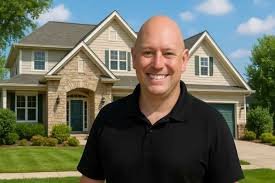
I’m Duane Buziak, NMLS #1110647, with Coast2Coast Mortgage LLC NMLS #376205. I work these programs daily for Hanover County buyers, from first-time buyers in Mechanicsville to veterans building in the Rutland corridor. The first step for any buyer I work with is a no hard inquiry mortgage pre approval: we run a soft pull first so you can see your options without any impact to your credit score.
Below, I’ll walk you through the seven best low down payment mortgage strategies available to Hanover County buyers right now, with real math, real program parameters, and a clear decision framework at the end. Equal Housing Opportunity.
1. VA Loans: $0 Down for Eligible Veterans in Mechanicsville and Ashland
The Challenge It Solves
Veterans and active-duty service members often assume they need to save a down payment like everyone else. They don’t. The VA loan program eliminates the down payment entirely, removes the PMI requirement that adds hundreds to conventional monthly payments, and allows seller concessions up to 4% of the purchase price. For buyers targeting new construction in the Atlee Station or Rutland corridors, this is frequently the most powerful tool on the shelf.
The Strategy Explained
VA loans are guaranteed by the U.S. Department of Veterans Affairs and available to eligible veterans, active-duty service members, and surviving spouses. There is no down payment requirement, no monthly PMI, and no maximum loan amount tied to the guarantee (though lender overlays apply). A VA funding fee applies at closing, which varies based on usage history and disability status, but it can be financed into the loan. Rates are typically competitive with or below conventional pricing.
Implementation Steps
1. Obtain your Certificate of Eligibility (COE) through the VA or let me pull it directly during the pre-approval process.
2. Start with a soft credit pull mortgage review to confirm your credit profile and establish your purchase range.
3. Identify whether your target property is new construction or resale. New construction VA loans require specific appraisal timing, which I coordinate with builders in the Atlee Station and Rutland corridors routinely.
4. Negotiate seller concessions up to 4% to offset funding fee and closing costs.
Worked Dollar Example: $420,000 New Construction Purchase
Here’s how the numbers look on a $420,000 new construction home in the Atlee corridor using a VA loan vs. conventional 5% down:
VA Loan: $0 down payment. VA funding fee at 2.15% (first use, no disability exemption) = $9,030, financed into the loan. Loan amount: $429,030. At a 6.75% rate (subject to change and credit approval), estimated monthly P&I: approximately $2,783. No PMI.
Conventional 5% Down: Down payment = $21,000. Loan amount = $399,000. At 7.0% (subject to change and credit approval), estimated monthly P&I: approximately $2,656. PMI estimated at $150-$200/month until 80% LTV is reached, adding roughly $1,800-$2,400 annually.
The VA borrower keeps $21,000 in their pocket at closing and pays no PMI. Even with the slightly higher loan balance from the financed funding fee, the monthly payment is competitive, and the cash preservation is substantial.
Pro Tips
Veterans with a service-connected disability rating may be exempt from the VA funding fee entirely, which changes the math significantly. Always confirm disability status before running final numbers. Also, VA loans on new construction require the builder to be VA-approved. I maintain working relationships with approved builders throughout the Atlee Station, Rutland, and Pole Green corridors and can confirm eligibility before you sign a contract.
2. FHA at 3.5% Down: The Workhorse Program for Hanover County First-Time Buyers
The Challenge It Solves
For buyers who don’t have VA eligibility, FHA is often the most accessible path into homeownership, particularly for those with credit scores in the 580-679 range or limited savings. The 20% down payment myth is especially damaging here: on a $380,000 home in Mechanicsville, 20% down is $76,000. FHA brings that number down to $13,300. That’s a gap most families can actually close.
The Strategy Explained
FHA loans, backed by the U.S. Department of Housing and Urban Development, require 3.5% down with a 580+ FICO score. Buyers with scores between 500-579 can still qualify but must put 10% down. The Richmond MSA FHA loan limit should be confirmed at time of application through HUD’s published limits, as these are updated annually. FHA carries an upfront mortgage insurance premium (MIP) of 1.75% of the base loan amount, financed into the loan, plus an annual MIP that varies by LTV and loan term.
Implementation Steps
1. Pull your credit profile with a no credit hit mortgage application to confirm your FICO score and identify any quick-fix opportunities before formal submission.
2. Confirm the current Richmond MSA FHA loan limit applies to your target purchase price.
3. Calculate your true out-of-pocket requirement: 3.5% down plus closing costs, then layer in seller concessions (up to 6% on FHA) to reduce the cash needed.
4. Pair with a Virginia DPA program (see Strategy 4) to further reduce or eliminate out-of-pocket costs.
Worked Dollar Example: $380,000 Mechanicsville Home
FHA 3.5% Down: Down payment = $13,300. Base loan amount = $366,700. Upfront MIP at 1.75% = $6,417, financed in. Total loan = $373,117. Annual MIP at 0.55% (for a 30-year loan at this LTV range, subject to current HUD factors) = approximately $2,052/year or $171/month. At 6.875% (subject to change and credit approval), estimated P&I: approximately $2,452/month. Total estimated PITI before taxes/insurance: approximately $2,623/month.
The 20% myth comparison: 20% down on $380,000 = $76,000. FHA requires $13,300. The $62,700 difference could remain invested, used for reserves, or simply kept in savings while you build equity through ownership rather than rent payments.
Pro Tips
FHA MIP on 30-year loans with less than 10% down now persists for the life of the loan, which is a meaningful long-term cost. If your credit score is 680 or above, run a side-by-side comparison with conventional 3% down before committing to FHA. I do this comparison for every buyer as a standard step, because the right program depends on your specific profile, not a rule of thumb.
3. USDA Rural Loans: $0 Down in Outer Hanover, Including Studley and Cold Harbor
The Challenge It Solves
Many buyers assume USDA loans are for farmland or very rural areas far from the Richmond metro. That assumption costs them. Outer Hanover County, including areas around Cold Harbor, Studley, and portions of rural Ashland, may fall within USDA-eligible zones, meaning buyers in those areas could access $0 down financing with no PMI and competitive rates. Most buyers I work with in those corridors have never been told this option exists.
The Strategy Explained
USDA Guaranteed Rural Housing loans, administered through the USDA’s Rural Development program, offer $0 down financing for buyers who meet income limits and whose target property falls within an eligible area. Income limits are set by household size and county, and they are more generous than many buyers expect. The program carries a 1% upfront guarantee fee (financeable) and a 0.35% annual fee, both of which are significantly lower than FHA MIP on a long-term basis.
Implementation Steps
1. Check property eligibility using the USDA eligibility map before falling in love with a specific address. Eligibility boundaries can change, so confirm at time of application.
2. Confirm household income against current USDA limits for Hanover County. I run this check during the initial consultation at no cost.
3. Compare USDA fee structure against FHA MIP to determine long-term cost advantage.
4. Note that USDA loans have longer processing timelines than conventional. Build this into your contract timeline, especially on new construction.
USDA vs. FHA Fee Comparison on a $340,000 Purchase
USDA: $0 down. Upfront guarantee fee at 1% = $3,400, financed in. Annual fee at 0.35% of outstanding balance = approximately $1,190/year or $99/month in year one, declining as the balance decreases.
FHA at 3.5% down: Down payment = $11,900. Upfront MIP at 1.75% = $5,773, financed in. Annual MIP at 0.55% = approximately $1,793/year or $149/month, persisting for the life of the loan on a 30-year term with less than 10% down.
USDA saves approximately $50/month in mortgage insurance and eliminates the down payment entirely. For buyers in eligible outer Hanover areas, this is frequently the strongest available program.
Pro Tips
USDA eligibility maps are updated periodically, and areas that were eligible previously may be reclassified as population grows. If you’re considering a property in Studley, Cold Harbor, or rural areas east of Mechanicsville, verify eligibility now rather than assuming it will remain available. I check this at the start of every consultation for buyers targeting those corridors.
4. Virginia DPA Programs: Stack Down Payment Assistance on FHA or Conventional
The Challenge It Solves
Even 3.5% down can feel out of reach when you’re also covering moving costs, home inspection fees, and the first few months of homeownership expenses. Virginia down payment assistance programs solve this by layering additional funds on top of your base loan, in some cases reducing your out-of-pocket requirement to near zero. For buyers in the Rutland and Pole Green new construction corridors, where builder incentive windows create short timelines, DPA programs can be the difference between getting into a home now and waiting another year.
The Strategy Explained
Two DPA programs I work with regularly in the wholesale channel are structured as follows. Dynamo DPA offers 2.5% or 3.5% assistance with a 580 FICO minimum, layered on an FHA base loan. Turbo DPA offers 3.5% or 5% assistance with a 600 FICO minimum and allows a combined loan-to-value (CLTV) up to 101.5%, meaning closing costs can also be wrapped in. Both programs are available through the wholesale broker channel and are not available at retail banks. Confirm current program availability and terms at time of application, as program parameters are subject to change.
Implementation Steps
1. Establish your base loan eligibility first: FHA at 580+ FICO or conventional at 620+ FICO.
2. Identify which DPA tier you qualify for based on credit score: Dynamo at 580+, Turbo at 600+.
3. Calculate the combined assistance against your down payment and closing cost requirements to determine true out-of-pocket cost.
4. If purchasing new construction in Rutland or Pole Green, coordinate DPA timing with builder incentive deadlines. I manage this timeline for buyers in those communities regularly.
Pro Tips
DPA programs are not charity. They are structured financing tools, often in the form of a second lien at a below-market or deferred rate. Understanding the full cost structure of the DPA layer is essential before committing. I walk every buyer through a side-by-side of DPA-assisted vs. standard FHA to confirm the combination makes financial sense for their specific hold period and goals.
5. Conventional 3% Down: The Low-PMI Path for Buyers With Stronger Credit
The Challenge It Solves
Buyers with 680+ credit scores are frequently steered toward FHA by default, even when conventional financing would cost them less over time. The key distinction: PMI on a conventional loan cancels automatically when your loan balance reaches 80% of the original appraised value. FHA MIP on a 30-year loan with less than 10% down does not cancel. On a 7-year hold, that difference adds up to thousands of dollars. For buyers in the Atlee area purchasing at $400,000, the conventional 3% path often wins on total cost.
The Strategy Explained
Conventional 3% down programs, including Fannie Mae’s HomeReady and standard conventional options, require a minimum 620 FICO score, though 680+ typically unlocks better pricing tiers. HomeReady has income limits tied to area median income, while standard conventional 3% does not. PMI rates on conventional loans vary by credit score and LTV but are generally lower than FHA MIP for borrowers with strong credit profiles, and they disappear at 80% LTV.
Implementation Steps
1. Confirm your credit score is 680+ for optimal conventional pricing. If you’re at 660-679, I’ll run both FHA and conventional scenarios to find the better outcome.
2. Check HomeReady income eligibility if your household income is near the area median. If you exceed the limit, standard conventional 3% still applies.
3. Request a 7-year total cost comparison between FHA and conventional, accounting for MIP persistence vs. PMI cancellation.
4. Factor in the seller concession limits: conventional allows up to 3% at LTV above 90%, which covers most 3% down scenarios.
Side-by-Side: $400,000 Atlee Area Home Over 7 Years
FHA 3.5% down: Down payment = $14,000. Upfront MIP financed = $6,755. Annual MIP at 0.55% = approximately $2,133/year. Over 7 years, total MIP paid = approximately $14,931 (declining slightly as balance reduces). MIP does not cancel.
Conventional 3% down (680+ FICO): Down payment = $12,000. No upfront MIP. PMI estimated at 0.5-0.7% annually (subject to insurer pricing and credit profile) = approximately $2,000-$2,800/year. At 7 years, the loan balance on a $400,000 purchase with 3% down reaches approximately 80% LTV, at which point PMI cancels. Total PMI paid over 7 years estimated at $14,000-$19,600, but $0 per month thereafter.
The right answer depends on your specific credit score, the PMI rate your profile attracts, and how long you plan to stay. I run this comparison for every buyer in this credit range before recommending a program.
Pro Tips
If you’re at 679 and close to the 680 threshold, it’s sometimes worth a brief credit optimization period before application. A single score point can shift you into a significantly better pricing tier. I identify these opportunities during the soft pull review at no cost and no impact to your credit.
6. Seller Concessions: Reduce Out-of-Pocket Costs Without Touching Your Down Payment
The Challenge It Solves
Down payment is only part of the cash equation. Closing costs on a purchase in the $380,000-$420,000 range typically run 2-4% of the purchase price, which means $7,600 to $16,800 in additional funds needed at closing. Seller concessions, when negotiated correctly within program limits, can offset or eliminate these costs entirely, letting you preserve your savings for reserves or post-closing expenses. This is especially relevant in the Atlee Station and Rutland new construction market, where builders often have incentive programs that can be structured as concessions.
The Strategy Explained
Each loan program caps the seller concessions a buyer can receive. Per CFPB guidelines and program rules: VA allows up to 4% of the purchase price in seller concessions. FHA allows up to 6%. Conventional varies by LTV: 3% when LTV is above 90% (which covers most 3% down scenarios), 6% at 75.01-90% LTV, and 9% at or below 75% LTV. Concessions can cover origination fees, title costs, prepaid items, and in some cases discount points to buy down your rate.
Implementation Steps
1. Identify your program’s concession limit before writing your offer. This is a non-negotiable first step.
2. Request a Loan Estimate early in the process to understand your actual closing cost total before negotiating.
3. Structure your offer to request concessions up to the program limit, particularly in new construction where builders frequently have flexibility.
4. On builder purchases in Atlee Station or Rutland, ask specifically about builder incentive programs and how they interact with your loan program’s concession cap.
Worked Dollar Example: $420,000 Purchase
Estimated closing costs at 2-4%: $8,400 to $16,800.
VA concessions at 4%: $16,800. Covers the full closing cost range.
FHA concessions at 6%: $25,200. More than enough to cover closing costs and potentially buy down the rate.
Conventional at 3% (LTV above 90%): $12,600. Covers the lower end of closing costs fully; may require a small contribution at the higher end.
In every case, negotiating concessions reduces the cash you need at closing without affecting your down payment or loan approval. On a new construction purchase in the Rutland corridor, I’ve structured transactions where concessions effectively produced a no-out-of-pocket closing option for the buyer within the builder’s incentive window.
Pro Tips
Concessions cannot exceed your actual closing costs. If you negotiate 6% on an FHA loan but your closing costs are only 3%, the excess doesn’t come back to you as cash. Structure concessions to match your actual cost estimate, and use any remaining room for a rate buydown if the numbers support it. I provide a closing cost estimate before any offer is written so buyers negotiate from an accurate number, not a guess.
7. Broker Access vs. Bank Hours: Why Program Availability Decides Your Options
The Challenge It Solves
The strategies above are only available to you if your loan originator can actually access them. A retail bank loan officer offers programs from one institution’s shelf. If that institution doesn’t offer USDA, or their DPA product was discontinued, or their VA pricing isn’t competitive this week, you don’t know what you’re missing. As a broker, I access multiple wholesale lenders simultaneously, which means VA, FHA, USDA, Dynamo DPA, Turbo DPA, and conventional programs are all available in a single conversation. That’s a structural difference, not a marketing claim.
The Strategy Explained
Broker access means I shop your file across multiple wholesale lenders to find the best combination of rate, program, and terms for your specific profile. I’m not limited to one institution’s guidelines, one institution’s pricing, or one institution’s product lineup. I also provide direct, 24/7 access: you can reach me evenings, weekends, and during builder contract deadlines, not an admin team routing messages during business hours.
For Hanover County buyers, this matters most in two scenarios: new construction timelines where builder deadlines don’t follow bank hours, and complex layered transactions where DPA + base loan + seller concessions must all be coordinated simultaneously.
Starting with a soft credit pull mortgage review means we identify your best program before any hard inquiry touches your credit report. You see your options with zero risk.
Implementation Steps
1. Start with a soft pull review. I pull your credit profile without a hard inquiry so we can identify your program options before you’re committed to anything.
2. Review the program comparison across VA, FHA, USDA, DPA, and conventional simultaneously, not sequentially.
3. Select the optimal program based on your credit profile, location, purchase price, and hold period goals.
4. Proceed to full application with a clear program recommendation and cost comparison in hand.
Broker vs. Retail Bank: Direct Comparison
The table below reflects structural, factual differences between the broker model and a retail bank model. Allison Davis operates through George Mason Mortgage’s Mechanicsville branch as a retail loan officer, which means her program access and availability are defined by that institution’s structure.
Program Access: Duane Buziak (broker) accesses multiple wholesale lenders simultaneously, including VA, FHA, USDA, DPA, and conventional. Allison Davis (George Mason Mortgage, retail) offers programs available through George Mason Mortgage’s institutional product lineup.
DPA Options: Duane Buziak offers Dynamo DPA and Turbo DPA through the wholesale channel. Retail bank DPA availability depends on George Mason Mortgage’s current product offerings.
Availability: Duane Buziak provides 24/7 direct access, including evenings and weekends, with no admin team routing. George Mason Mortgage operates on standard bank business hours with file handling routed through an admin team.
Soft-Pull Pre-Approval: Duane Buziak offers a no credit hit mortgage application as the starting point for every buyer. Retail lenders vary in their soft-pull availability and process.
Wholesale Rate Access: Duane Buziak shops rates across multiple wholesale lenders to find competitive pricing for each specific profile. Retail loan officers price within their institution’s rate sheet.
New Construction Coordination: Duane Buziak maintains active builder relationships in Atlee Station, Rutland, and Pole Green corridors with experience coordinating VA, FHA, and DPA timing on new construction contracts. Retail bank coordination depends on the institution’s builder relationships and staff capacity.
Pro Tips
When evaluating any loan originator, ask two questions: How many wholesale lenders do you access? and Can I reach you on a Saturday night when the builder needs an answer? The answers tell you everything about whether that originator can execute on the strategies above when it actually counts.
Your Implementation Roadmap
Every Hanover County buyer I work with starts in the same place: a soft pull review that identifies their program options without touching their credit. From there, the decision tree looks like this.
VA-eligible? Strategy 1 is almost always your starting point. $0 down, no PMI, and seller concessions up to 4% make it the most powerful program available. Pair with Strategy 6 to eliminate closing costs.
Credit 580+, not VA-eligible? FHA at 3.5% down (Strategy 2) is your base, layered with Virginia DPA (Strategy 4) to reduce or eliminate out-of-pocket costs. Negotiate FHA seller concessions up to 6% (Strategy 6) to complete the picture.
Purchasing in outer Hanover, Cold Harbor, Studley, or rural Ashland? Add a USDA eligibility check (Strategy 3) before committing to FHA. If the property qualifies, USDA’s $0 down and lower annual fee structure frequently wins.
Credit 680+ and not VA-eligible? Run the conventional 3% comparison (Strategy 5) against FHA before deciding. The PMI cancellation math often favors conventional on a 5-7 year hold.
Every buyer should negotiate seller concessions (Strategy 6) regardless of program. Leaving concession capacity on the table is leaving cash behind.
All paths run through Strategy 7. If your originator can’t access USDA, doesn’t offer DPA, or isn’t available when your builder calls on a Friday evening, the strategies above are theoretical. Broker access makes them real.
For buyers in the Atlee Station, Rutland, and Pole Green new construction corridors specifically: builder incentive windows are time-sensitive. Getting pre-approved with the right program before you walk into a model home gives you negotiating leverage and timeline certainty that buyers who start at the builder’s preferred lender often don’t have.
Ready to see what you qualify for in Hanover County? Duane Buziak, VA Broker of the Year 2024 and 2025 and Scotsman Guide Top Originator (#114, $51.2M), starts every buyer with a soft pull so there’s no hard inquiry on your credit report. Call or text 804-212-8663 to get started.
Frequently Asked Questions
What is the minimum down payment for a home in Hanover County?
It depends on the program and your eligibility. VA and USDA loans require $0 down for eligible buyers. FHA requires 3.5% down with a 580+ FICO score. Conventional loans are available at 3% down. Virginia DPA programs can layer on top of FHA or conventional to reduce out-of-pocket costs further. Most buyers in Hanover County qualify for at least one program requiring 3.5% or less.
Do VA loans work for new construction in Atlee Station or Rutland?
Yes, VA loans can be used for new construction, but the builder must be VA-approved and the property must pass a VA appraisal. I work with VA-approved builders in the Atlee Station, Rutland, and Pole Green corridors and coordinate the appraisal and timeline requirements as part of the standard process.
Are USDA loans available in Mechanicsville or Ashland?
USDA eligibility is property-specific and tied to USDA’s rural designation map. Most of Mechanicsville proper does not qualify. Outer Hanover areas, including parts of Cold Harbor, Studley, and rural Ashland, may qualify. Eligibility must be verified on a specific address at time of application using the USDA eligibility map.
What is a soft credit pull mortgage and how does it differ from a hard inquiry?
A soft pull reviews your credit profile without creating an inquiry visible to other lenders and without affecting your credit score. A hard inquiry, which occurs when you formally apply for credit, can temporarily lower your score by a few points and is visible to other lenders. I start every buyer with a soft pull so you can see your program options and estimated payment range before any hard inquiry is submitted.
Can I use down payment assistance on a new construction home in Hanover County?
Yes. Virginia DPA programs like Dynamo and Turbo DPA can be used on new construction purchases. The key is coordinating the DPA timeline with the builder’s contract and closing schedule. Builder incentive windows in the Rutland and Pole Green corridors sometimes align well with DPA program timelines, creating a no-out-of-pocket closing option for qualified buyers.
How do seller concessions work on a new construction purchase?
On new construction, concessions typically come from the builder rather than a traditional seller. Builders in the Atlee Station and Rutland corridors often have structured incentive programs that can be applied toward closing costs, rate buydowns, or upgrades. How those incentives are categorized affects your loan program’s concession cap. I review builder incentive structures before you sign a contract to ensure they’re structured in a way that maximizes your benefit within program limits.
Is FHA or conventional better for a first-time buyer in Hanover County?
It depends on your credit score and how long you plan to stay in the home. Buyers with scores below 680 often find FHA more accessible. Buyers with 680+ credit scores frequently benefit from conventional financing because PMI cancels at 80% LTV while FHA MIP on a 30-year loan with less than 10% down does not. I run a side-by-side comparison for every buyer before recommending a program.
What is the difference between working with a broker and a retail bank loan officer in Hanover County?
A retail bank loan officer offers programs from one institution. A broker accesses multiple wholesale lenders simultaneously, which means broader program availability, competitive rate shopping across lenders, and access to DPA programs that retail banks typically don’t offer. As a broker, I also provide direct 24/7 access rather than routing through an admin team during business hours, which matters on new construction timelines where decisions often happen outside of 9-to-5.
Legal Disclaimer
All loan programs, rates, terms, and down payment requirements referenced in this article are subject to change and are based on program guidelines current at time of writing. Rates and monthly payment examples are for illustrative purposes only and do not constitute a loan commitment or guarantee of approval. Actual rate, payment, and program eligibility depend on individual credit profile, property type, loan amount, and lender guidelines at time of application. Program availability, including DPA programs, is subject to change without notice. USDA and FHA loan limits are updated periodically and must be confirmed at time of application. This content is intended for educational purposes and does not constitute financial or legal advice. Duane Buziak NMLS #1110647 | Coast2Coast Mortgage LLC NMLS #376205 | Equal Housing Opportunity.
About the Author
Duane Buziak, NMLS #1110647, is a mortgage broker with Coast2Coast Mortgage LLC NMLS #376205, specializing in VA, FHA, USDA, and conventional purchase financing for buyers throughout Hanover County, including Mechanicsville, Ashland, Atlee/Elmont, Cold Harbor, and Studley. Duane was named VA Broker of the Year for 2024 and 2025, ranked #114 nationally on the Scotsman Guide Top Originators list with $51.2M in closed volume, earned UWM PRO ELITE status in 2025, and is recognized as a Top 1% Nationwide originator with over 15 years of experience. Reach Duane directly at 804-212-8663 or at HanoverCountyMortgage.com. Equal Housing Opportunity.


