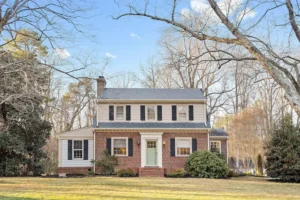


A contract price can feel settled the moment a seller accepts your offer. It is not. How appraisal gaps affect buyers becomes very real when the appraiser concludes the home is worth less than the agreed price, leaving a financing decision that may need to be made in days, not weeks. For Hanover County move-up buyers competing for a larger yard, a preferred school boundary, or a new-construction lot near Mechanicsville or Ashland, that gap can change the cash required at closing.
By Duane Buziak, NMLS #1110647
An appraisal is not a prediction of what a buyer may happily pay. It is an opinion of market value based on the property, recent comparable sales, condition, location, and market data. Most mortgage programs size the loan using the lower of the purchase price or appraised value. That is why a $20,000 gap is more than a negotiating inconvenience. It can become a cash-to-close issue.
Table of Contents
- What an appraisal gap means
- A worked Hanover County purchase example
- How Conventional, FHA, and VA financing respond
- Offer and financing choices after a low appraisal
- Questions buyers should ask before waiving protections
- FAQ
What an Appraisal Gap Means for a Buyer
An appraisal gap exists when the appraised value comes in below the contract price. If a home is under contract for $600,000 but appraises for $575,000, the gap is $25,000. A buyer does not automatically lose the home, and a low appraisal does not prove the offer was wrong. It does mean the transaction must be restructured, renegotiated, or supported with more cash.
Appraisals are especially sensitive when a neighborhood has few recent sales that closely match the home. A renovated house, a larger lot, a finished basement, or an active new-construction phase may be compelling to a family buyer but harder to support with closed comparable sales. Hanover County had 109,979 residents in the 2020 Census, according to the U.S. Census Bureau, and continued suburban growth can make timely, well-matched sales data particularly valuable in fast-moving pockets of the county.
The appraisal also protects the financing structure. For Conventional loans sold to Fannie Mae, the appraised value supports the loan-to-value calculation. The same core issue applies to FHA and VA purchases: the property value used for underwriting may limit the available loan amount. Program rules differ, but no program makes a value gap disappear.
A Fully Worked Appraisal-Gap Example
Assume a buyer contracts to purchase a Hanover County home for $600,000 with a 20% down Conventional loan. The planned loan amount is $480,000, and the buyer pays a $525 appraisal fee. The appraisal comes in at $575,000, creating a $25,000 gap.
With 20% down based on the $575,000 appraised value, the maximum 80% loan is $460,000. The buyer must now bring $140,000 toward the price: the $115,000 down payment tied to appraised value plus the $25,000 appraisal gap. If estimated closing costs are $9,600, total cash needed is $140,000 + $9,600 + $525 = $150,125.
At a fixed 6.50% interest rate for 30 years, principal and interest on the revised $460,000 loan is approximately $2,907.02 per month. That payment excludes property taxes, homeowners insurance, and any association dues. The key point is that paying the gap in cash does not increase the loan amount. It changes the buyer’s cash requirement while leaving the mortgage based on the lower value.
How Loan Types Handle a Low Appraisal
Conventional financing is often the primary lane for Hanover County move-up buyers because it can pair well with larger down payments, strong credit profiles, and higher purchase prices. A buyer may choose to cover some or all of a gap, reduce the down payment percentage if permitted, request a seller price reduction, or combine those choices. The best answer depends on reserves, monthly payment comfort, and how long the buyer expects to own the home.
FHA financing generally permits a 3.5% minimum down payment for qualified buyers, but the loan calculation still relies on the lower of sales price or appraised value. An FHA buyer facing a gap may need seller cooperation or additional funds. The appraisal must also meet property condition standards, which can create a separate repair discussion.
VA financing can be an excellent option for eligible buyers, including buyers who prefer to preserve savings for a move, repairs, or future projects. A VA appraisal establishes a reasonable value, and a buyer can bring cash above that value if the contract remains higher. The decision should be deliberate: covering a gap is different from a required down payment, and it should not drain funds needed after closing.
| Dimension | Mortgage broker approach | Single-shelf mortgage provider approach |
|---|---|---|
| Broker access | Can review multiple available investor options for the same borrower profile. | Uses its own available program menu and underwriting overlays. |
| FICO floors | May compare differing program minimums and pricing tiers where available. | Applies its own published or internal credit standards. |
| Program breadth | Can evaluate Conventional, FHA, VA, jumbo, renovation, and select non-QM options. | Program selection depends on that provider’s current offerings. |
| Pricing flexibility | Can compare rate, points, credits, and cash-to-close structures across options. | Pricing is limited to that provider’s rate sheet and fee structure. |
| Appraisal-gap planning | Can model revised loan amounts and alternative down-payment structures. | May offer solutions within its own product rules. |
Four Practical Choices After a Low Appraisal
The first choice is a price reduction. If the seller agrees to reduce the price to the appraised value, the gap is eliminated. This is often the cleanest outcome, though sellers may resist if they have backup interest or believe the appraisal missed relevant comparable sales.
Second, buyers can cover all or part of the gap with cash. That can preserve the contract, but it should be measured against emergency reserves, moving costs, immediate repairs, and the possibility that the buyer is placing more cash into the home than the appraisal supports on day one.
Third, the parties can split the difference. A seller might reduce the price by $15,000 while the buyer contributes $10,000 above appraised value. This is common when both parties want to close and neither wants to absorb the full adjustment.
Fourth, a buyer can challenge factual appraisal errors or provide relevant closed sales that were unavailable to the appraiser. A reconsideration of value is not a second negotiation and is not guaranteed. It works best when there is clear evidence, such as omitted upgrades, incorrect square footage, or strong comparable sales that meet the program’s requirements.
Before You Promise an Appraisal Gap
An appraisal-gap clause may make an offer more attractive, but it should name a specific maximum amount. “Buyer will cover any gap” is materially different from “buyer will contribute up to $15,000 above appraised value.” The capped version lets the seller see your commitment while protecting you from an unlimited cash obligation.
Ask your broker to review the scenario before you write the offer, not after the appraisal arrives. Confirm your verified funds, planned down payment, estimated closing costs, and payment at the revised loan amount. Hanover County Mortgage can begin this work with a NoTouch Credit Pull, allowing an early planning conversation without a hard inquiry or credit hit.
Buyers should also separate emotion from resale risk. Paying above appraised value may be reasonable for a long-term home with features that are difficult to replace, such as a particular lot or proximity to family. It may be less appealing when the budget is already tight, the home needs substantial work, or the buyer may move again within a few years.
FAQ: How Appraisal Gaps Affect Buyers
1. What is an appraisal gap?
An appraisal gap is the difference between the contract price and a lower appraised value.
2. Does a low appraisal cancel the contract?
No. The buyer and seller can renegotiate, the buyer can add cash, or the contract terms may allow the buyer to walk away.
3. Can a Conventional buyer finance the appraisal gap?
Usually not directly. The loan is generally based on the lower appraised value, so the gap is commonly paid in cash or resolved through a price change.
4. Can a VA buyer pay above appraised value?
Yes. An eligible VA buyer may pay the difference in cash if the contract price exceeds the VA appraised value.
5. Can an FHA buyer cover a gap?
Yes, if the buyer has sufficient funds, but the FHA loan amount remains subject to the lower value calculation.
6. Can an appraisal be reconsidered?
Yes, when there are credible factual corrections or relevant comparable sales. A different value is never guaranteed.
7. Is it risky to waive an appraisal contingency?
It can be. Waiving the protection may require you to bring substantial cash or proceed without a financing adjustment if value comes in low.
8. Should I use a hard credit inquiry before making an offer?
Not necessarily. A soft pull mortgage review can help you plan before choosing when to authorize a full mortgage application.
Make the Offer With the Cash Plan Already Clear
An appraisal gap is manageable when it is anticipated, priced, and capped before the offer is written. A confident offer is not simply the highest number. It is an offer supported by verified funds, the right mortgage structure, and a clear decision about what you are willing to pay if the value comes in short.
Legal disclaimer: This article is for general educational purposes only and is not a commitment to lend, a loan approval, legal advice, tax advice, or an appraisal opinion. Loan approval, rates, terms, and program eligibility are subject to credit, income, assets, property review, appraisal, and underwriting requirements. Equal Housing Opportunity.
Duane Buziak, Mortgage Maestro | NMLS: 1110647 | Licensed in VA · FL · TN · GA | UWM PRO ELITE 2025 | UWM Top 20 Purchase LO Virginia 2025 | UWM Speed to Close Industry Leading 2025 | Scotsman Guide Top Originator 2025 & 2026 | VA Broker of the Year 2024-2025 | Top 1% Nationwide | Coast2Coast Mortgage | DuaneBuziakMortgageMaestro.com | duane@coast2coastml.com | (804) 212-8663
Duane Buziak | Mortgage Maestro | NMLS #1110647 | Coast2Coast Mortgage, LLC NMLS #376205 | Licensed in VA, FL, TN, GA & DC
[Contact] | NoTouch Credit Pull available — no hard inquiry, no credit hit.