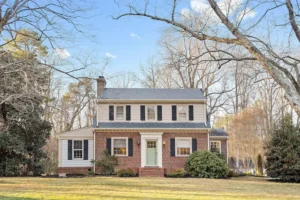


A house near the schools you prefer in Mechanicsville, an Ashland home with walkable downtown access, or new construction closer to Montpelier can move quickly from listing to contract. If you are researching how to buy house Hanover County, the strongest first move is not touring homes. It is defining a payment, financing lane, and documentation plan that lets you make a clean offer when the right property appears.
Hanover County had 109,979 residents in the 2020 Census, and its mix of established neighborhoods, larger lots, and new construction continues to attract buyers moving up from Richmond-area starter homes. That creates a practical reality: buyers often compete on certainty, not simply price. A well-prepared conventional offer with a verified down payment and a realistic closing timeline can be more persuasive than a higher offer built on assumptions.
Duane Buziak, NMLS #1110647
Table of Contents
- Start with a payment and cash plan
- Get pre-qualified before house hunting
- Choose the right mortgage path
- Compare broker access with a single-shelf model
- Shop homes and write a credible offer
- Complete inspections, appraisal, and closing
- Frequently asked questions
Start With a Payment and Cash Plan
The purchase price is only one number. Before setting a search ceiling, estimate principal and interest, property taxes, homeowners insurance, any homeowners association dues, and maintenance reserves. For a detached home, many buyers also keep funds available for immediate items such as appliances, window treatments, moving costs, or minor repairs after closing.
Here is a fully worked example using a conventional purchase scenario. Assume a $500,000 home price, 20% down, and a $400,000 30-year fixed-rate loan at 6.50%. The principal-and-interest payment is $2,528.27 per month. If the broker fee is 1.00% of the loan amount, that fee is $4,000. Add estimated third-party closing charges of $3,200 and prepaid taxes and insurance of $2,800, and estimated cash needed at closing is $110,000: $100,000 down payment + $4,000 broker fee + $3,200 charges + $2,800 prepaids.
That example is illustrative, not a quote. Taxes, insurance, credit profile, occupancy, loan program, points, and contract terms can materially change the final figures. The point is to separate the monthly payment decision from the cash-to-close decision before emotions enter the home search.
For move-up buyers, sale proceeds from a current home may cover some or all of the down payment. That can work well, but timing matters. A sale contingency, bridge strategy, or extended closing date should be discussed before an offer is written, especially if the new home is under construction or the seller expects a fast close.
Get Pre-Qualified Before House Hunting
A thoughtful pre-qualification helps you search with confidence without rushing into a full application. A soft credit pull mortgage review can provide an early view of scores, debt obligations, and potential program fit without the initial impact associated with a hard inquiry. This is useful for buyers asking for a mortgage pre approval without hard pull while they are still deciding on timing, price point, or down payment.
A no-hard-inquiry review is not the same as final approval. Once you select a property and move forward, the file must be fully documented and submitted for underwriting. But starting with a soft-pull mortgage broker conversation can identify issues early, including a high credit-card balance, a recently opened account, variable bonus income, or a debt-to-income ratio that needs a different approach.
Have recent pay stubs, two years of W-2s or tax returns when applicable, bank statements, photo identification, and details for monthly debts ready. Self-employed buyers should expect a closer review of tax returns, business cash flow, and write-offs. A buyer building a home should also expect construction documents, plans, specifications, and a builder contract.
Choose the Right Mortgage Path for Your Purchase
Conventional financing is often the lead option in Hanover County for buyers with established credit, stable income, and a meaningful down payment. It can be particularly attractive for move-up purchases and new construction because it offers flexible down payment structures, broad property eligibility, and no upfront funding fee. Conventional options can begin as low as 3% down for qualified buyers, though private mortgage insurance may apply below 20% down.
FHA financing may fit a buyer who needs more flexibility with credit history or wants a 3.5% down payment. FHA mortgage insurance has both upfront and monthly components, so it is worth comparing its full payment against a conventional option rather than deciding based on down payment alone.
VA financing remains a valuable option for eligible veterans and service members purchasing a primary residence. Qualified buyers may be able to finance with no down payment, but the funding fee and residual-income analysis should be reviewed carefully. The best choice depends on the complete file, not a headline rate.
USDA financing can also be relevant for eligible properties in more rural portions of the county. Buyers considering Ruther Glen or outlying areas should confirm property eligibility before assuming a particular address qualifies.
Why a Broker Comparison Matters
A mortgage broker can compare programs and pricing across multiple wholesale sources, while a single-shelf retail model generally presents its own available offerings. That does not make one path automatically better. A borrower with a straightforward file may find several good options. A buyer with commission income, a construction timeline, a condominium question, or a credit nuance may benefit from broader program access and more time spent matching the file to the right underwriting approach.
| Comparison point | Mortgage broker model | Single-shelf retail model |
|---|---|---|
| Funding-source access | Can compare multiple wholesale sources | Uses its own available product shelf |
| FICO floors | May compare different program overlays by source | Applies its own published or internal overlays |
| Program breadth | Can review conventional, FHA, VA, USDA, jumbo, renovation, and specialty options | Varies by the company’s product menu |
| Pricing flexibility | Can compare available rate-and-fee combinations | Pricing is limited to that company’s available structure |
| Pre-qualification approach | May offer a no credit hit mortgage application review before a full file is submitted | Process and credit-pull policy vary by company |
The comparison should stay focused on written estimates, closing timelines, communication, and program fit. Ask each professional to explain whether a quoted rate includes points, how long the rate is locked, which fees are controlled versus third-party, and what documentation could affect approval. Ask about our no-out-of-pocket closing options if preserving cash is a priority, while recognizing that costs are still paid through an agreed transaction structure.
Shop Homes and Write a Credible Offer
Once your payment target and pre-qualification are clear, tour with a short list of non-negotiables. For some households, school assignments and commute patterns drive the decision. For others, it is acreage, a first-floor primary suite, garage space, or proximity to Ashland restaurants and Kings Dominion. New construction deserves a separate checklist: lot premium, design-center selections, estimated completion date, warranty terms, and whether the builder is offering an incentive tied to a preferred financing provider.
When you find the house, your offer should address more than price. The earnest-money deposit, financing contingency, inspection period, appraisal language, requested seller contributions, and closing date all communicate your seriousness. A shorter inspection period can be attractive, but do not waive protections casually. Homes with wells, septic systems, older roofs, or additions may require more investigation, not less.
Move Through Appraisal, Underwriting, and Closing
After ratification, the work becomes document-driven. The appraisal confirms whether the property supports the contract price for financing purposes. If value comes in low, the buyer and seller may renegotiate, the buyer may bring additional cash, the price may be reduced, or the parties may end the contract under applicable contingency terms.
Underwriting verifies income, assets, credit, debts, insurance, title information, and property details. Avoid changing jobs, financing a vehicle, opening new credit accounts, or moving large undocumented deposits while the loan is in process. Even a well-qualified buyer can create delays by changing the information that supported pre-qualification.
Closing disclosure figures should be reviewed before settlement. Compare the final cash needed with your original estimate, ask about any material changes, and confirm wire instructions directly with the settlement office using a verified phone number. Wire fraud remains a real risk in real estate transactions.
FAQ: How to Buy a House in Hanover County
1. How much should I save before buying a house in Hanover County?
Save for the down payment, closing costs, prepaids, inspection, appraisal, moving expenses, and a post-closing reserve. The exact amount depends on the loan program and contract structure.
2. Can I get pre-qualified without a hard credit inquiry?
Often, yes. A soft-pull review may be available for an initial assessment. Full underwriting and final approval require more complete verification.
3. Is conventional financing better than FHA financing?
It depends on credit, down payment, debt ratio, and mortgage insurance costs. Compare the total monthly payment and cash needed, not only the minimum down payment.
4. Can I use a VA loan to buy in Hanover County?
Eligible borrowers can use VA financing for a primary residence, subject to credit, income, property, and program requirements.
5. What credit score do I need to buy a home?
Requirements vary by program and funding source. Conventional financing commonly starts around 620, while stronger scores can improve available options.
6. How long does a home purchase take?
Many financed purchases close in roughly 30 to 45 days, though appraisal timing, documentation, title work, and new-construction completion can extend that timeline.
7. Should I use the builder’s preferred financing provider?
Compare the incentive, rate, points, fees, lock terms, and total cash needed with at least one independent option before deciding.
8. What should I avoid after applying for a mortgage?
Avoid new debt, job changes, unexplained deposits, late payments, and major asset transfers until closing is complete.
A confident purchase starts with knowing what you can support comfortably, then keeping your financing strategy steady while you find the home that fits your next chapter.
Duane Buziak, Mortgage Maestro | NMLS: 1110647 | Licensed in VA · FL · TN · GA | UWM PRO ELITE 2025 | UWM Top 20 Purchase LO Virginia 2025 | UWM Speed to Close Industry Leading 2025 | Scotsman Guide Top Originator 2025 & 2026 | VA Broker of the Year 2024-2025 | Top 1% Nationwide | Coast2Coast Mortgage | DuaneBuziakMortgageMaestro.com | duane@coast2coastml.com | (804) 212-8663
Legal Disclaimer: This material is for educational purposes only and is not a commitment to extend credit or a guarantee of approval, rates, terms, or closing costs. All financing is subject to credit, income, assets, property appraisal, title review, underwriting, and program guidelines. Equal Housing Opportunity.
Duane Buziak | Mortgage Maestro | NMLS #1110647 | Coast2Coast Mortgage, LLC NMLS #376205 | Licensed in VA, FL, TN, GA & DC [Contact] | NoTouch Credit Pull available — no hard inquiry, no credit hit.